The key to kubernetes, have you got it?
Seven keys in the use of kubernetes
Today, the industry no longer questions the value of
containers. Considering the trend of adopting Devops
and Cloud Architecture, it is very important to use container functions to
realize enterprise business automation. Google kubernetes
(k8s), as an open source container arrangement system, has become the de facto
standard for cloud local applications. More and more enterprises are using kubernetes to create a seamless and scalable modern system
architecture composed of micro services and serverless functions.
However, companies investing in container based
applications often struggle to realize the value of kubernetes
and container technology, largely due to operational challenges.In
this article, we will share the seven basic capabilities that large
international companies need to invest in their kubernetes
so that they can effectively implement and leverage it to drive their business.
Hosting kubernetes
service ensures SLA and simplifies operations
While it may be controversial for some, let's start from the most critical
point: for production environments, mission critical applications - don't fall
into kubernetes' DIY trap.
Yes, kubernetes works well, containers are the
future of modern software delivery, and kubernetes is
the best practice for choreographing containers. But as we all know, managing
enterprise workload is very complex, in which SLA is very important.
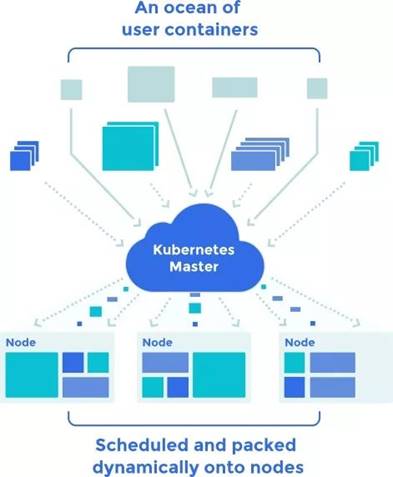
Simply put, kubernetes has control over how to schedule,
deploy, and extend the container groups (pods) that make up an application, and
how they leverage the network and underlying storage. After deployment of kubernetes cluster, it operation
team must determine how to expose these pods to consumer applications through
request routing, and how to ensure their health, ha, zero downtime environment
upgrade, etc. As the cluster grows, it needs to enable developers to go online
in seconds, enable monitoring and troubleshooting, and ensure smooth operation.
We found that the biggest challenge for customers is the operation and
maintenance of kubernetes after installation. After
the first installation, problems arise:
1. Large scale configuration of persistent storage and network
2. Keep up with kubernetes' fast-moving community
version
3. Patch application and underlying kubernetes
versions for security and periodic updates
4. Set up and maintain monitoring and logging
5. disaster recovery
6. Other
The pain of managing the operation and maintenance of production level kubernetes is compounded by the scarcity of talents and
skills across the industry. Nowadays, most organizations are hard to hire
highly sought after kubernetes experts, and they lack
advanced kubernetes experience to ensure smooth
operation on scale.
Hosted kubernetes service basically provides
enterprise level kubernetes without any operational
burden. These services can be provided exclusively by public cloud providers
such as AWS or Google cloud, or they can be solutions that enable organizations
to run kubernetes in their own data centers or hybrid
/ multi cloud environments.
Even with managed services, it is important to note that different types
of solutions will use managed or kubernetes as
a-service to describe very different levels of management experience. Some
services only allow you to deploy the kubernetes
cluster in a simple self-service way, while other services will take over some
ongoing operations of managing the cluster, while other services still provide
fully managed services, which will complete all the heavy work for you, provide
SLA guarantee, and do not require customers to provide any management overhead
or kubernetes expertise.
For example, using third-party hosted kubernetes
as a service, you can start and run enterprise kubernetes
in less than an hour, which can work in any environment. By providing kubernetes as a fully hosted service, the service
eliminates the operational complexity of kubernetes
in scale, including all the enterprise level functions out of the box:
automatic upgrade, multi cluster operation, high availability, monitoring, etc.
- all of which are handled automatically and supported by 24X7X365 SLA.
Kubernetes will be the backbone of your software innovation. Using DIY
method will cause unnecessary troubles to the business. Choosing hosting
service from the beginning will prepare for the success of the enterprise.
Cluster monitoring and logging
Kubernetes's production deployment can usually scale to hundreds of pods,
and the lack of effective monitoring and logging may lead to the failure to
diagnose serious faults that lead to service interruption and affect customer
satisfaction and business.
Monitoring provides visibility and detailed metrics for kubernetes infrastructure. This includes fine-grained
metrics of usage and performance for all cloud providers or local data centers,
regions, servers, networks, storage, and individual VMS or containers. The key
use of these metrics should be to improve data center efficiency and
utilization (which will translate into costs) of local and public cloud
resources.
Logging is a supplementary function for effective monitoring. Logging
ensures that logs are captured at every level of the architecture: from the kubernetes infrastructure, its components, and applications
for analysis, troubleshooting, and diagnostics. Centralized, distributed log
management and visualization is a key feature that can be satisfied using
proprietary or open source tools such as fluent bit, fluent D, elastic search,
and kibana (also known as efk
stack).
Monitoring
should not only be carried out around the clock, but also provide active alerts
for bottlenecks or problems that may arise in production, as well as role-based
dashboards, which contain KPIs on performance, capacity management, etc.
Registry and package management -
helm / Terrain
The private registry server is an important feature because it can store
docker images safely. Registry supports image management workflow, including
image signature, security, LDAP integration, etc. Package managers, such as
helm, provide a template (referred to as a "diagram" in helm) to
define, install, and upgrade kubernetes based
applications.
Once developers have successfully built their code, their ideal approach is
to regenerate the docker image using the registry, which is ultimately deployed
to a set of target pods using the helm diagram.
This simplifies the CI / CD pipeline and publishing process for kubernetes based applications. Developers can more easily
collaborate on their application, version code changes, ensure deployment and
configuration consistency, ensure compliance and security, and roll back to
previous versions when needed. Registry, together with package management,
ensures that the correct image is deployed to the correct container and that
security is integrated into the process.
CI / CD toolchain
for Devops
Enabling the CI/CD pipeline is essential to improve the quality, security,
and release speed of Kubernetes based applications.
Today, continuous integration pipelines (such as unit tests, integration
tests, etc.) and continuous delivery pipelines (such as deployment processes
from development environment to production environment) are usually configured
with gitops methods and tools, and developer workflow
usually starts with "git push" - each code check-in usually triggers
the build, test, and deployment processes. This includes using spinnaker or
other tools for blue-green or Canary auto deployment. More importantly, the kubernetes infrastructure can be easily "plugged"
into these CI / CD tools so that your developers can improve their productivity
and the quality of their releases.
Cluster supply
and load balancing
Production level kubernetes infrastructure
usually needs to create high availability, multi host, multi etcd kubernetes clusters, which
can span the availability zones in private or public cloud environments. The
supply of these clusters usually involves tools such as ansible or terraform.
Once the cluster is set up and pods are created for running applications,
the load balancer is responsible for routing traffic to the service. The load
balancer is not a native feature in the open source kubernetes
project, so you need to integrate with products such as nginx
portal controller, ha proxy or ELB (on AWS VPC) or other tools that extend the
portal plug-ins in kubernetes to provide load
balancing.
security
There is no
doubt that security is a key part of cloud local applications and needs to be
considered and designed from the beginning. Security is a constant throughout
the life cycle of a container, which affects the design, development, Devops practices, and infrastructure choices of container based applications. There are a range of
technology options available to cover a wide range of areas, such as
application level security and the security of containers and infrastructure
itself. These tools include role-based access control, multi factor
authentication (MFA), a & A (authentication and authorization) using OAuth,
openid, SSO and other protocols; different tools
(such as image registry, image signature, packaging), CVE scanning, etc.) that
provide authentication and security for the content inside the container
itself.
Government
Processes
around governance, auditing, and compliance are a sign of kubernetes'
growing maturity, as well as the growing number of kubernetes
based applications in large enterprises and regulated industries. Your kubernetes infrastructure and associated publishing
processes need to be integrated with tools to provide visibility and automatic
audit trails for different task and permission levels of any update to your kubernetes application or infrastructure for correct
compliance enforcement.
All in all,
enabling kubernetes for enterprise, mission critical
applications requires more than just deploying a kubernetes cluster. Using the kubernetes
service hosted on the public cloud will help enterprise users well cover the
above seven key considerations and help enterprises ensure that the kubernetes infrastructure is designed to fit the production
workload.
Silver Lining focuses on providing professional public
cloud architecture consulting design, deployment and implementation services,
cloud operation and maintenance services and cloud billing management services
for enterprise customers. For the pain points and difficulties of deploying
container services on enterprise customer cloud, Silver Lining can better help
enterprises realize rapid and safe deployment, maintenance and deployment of
containers!